

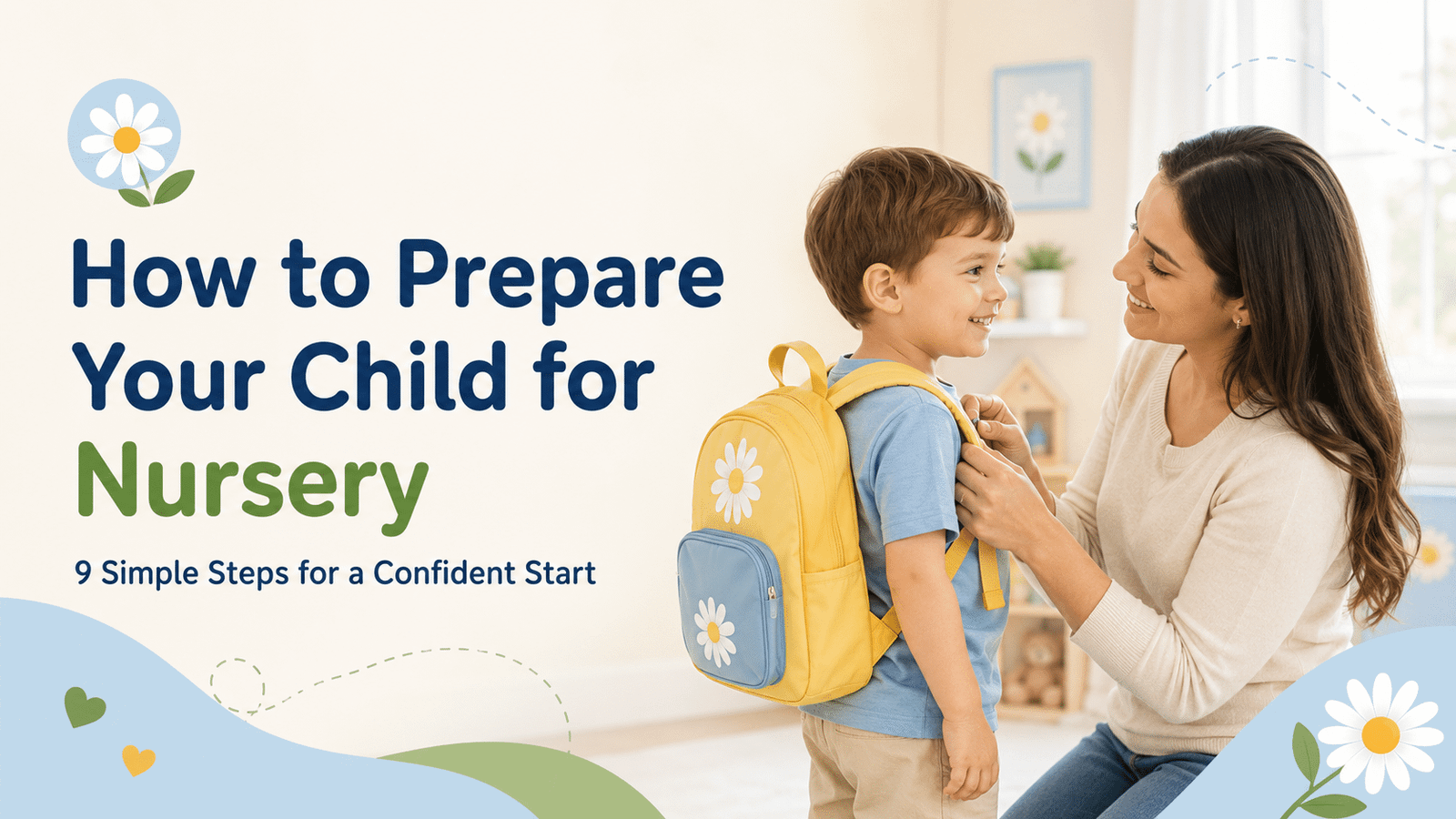
Starting nursery is an exciting milestone in your child’s early years. It introduces them to new friends, routines, learning activities, and opportunities to become more independent.
However, adjusting to a new environment can take time. Some children settle quickly, while others need additional reassurance and support.
At Daisy Nursery, we provide a safe and nurturing environment where children aged 2–5 years can learn, play, communicate, and grow through engaging activities guided by the British EYFS curriculum.
Here are nine practical ways to help your child feel confident and prepared for nursery.
1. Talk Positively About Nursery
Start talking about nursery before your child’s first day. Describe it as a welcoming place where they can play, learn, make friends, and enjoy exciting activities.
Use simple and encouraging phrases such as:
- “You will meet new friends.”
- “You will enjoy fun games and activities.”
- “Your teachers will be there to help you.”
Avoid making promises you cannot guarantee or using negative phrases such as “Don’t cry.” The goal is to create a positive and realistic image of the nursery experience.
2. Practise Short Separations
If your child is not used to being away from you, begin with short periods of separation with a trusted family member or caregiver.
Increase the time gradually to help your child understand that you will always return. This can make their first nursery drop-off feel more familiar and less stressful.
3. Create a Nursery-Friendly Routine
Children feel safer when they know what to expect. Before nursery begins, gradually adjust your child’s sleeping, waking, mealtime, and activity schedule.
A consistent morning routine can include:
- Waking up at the same time.
- Getting dressed.
- Eating breakfast.
- Packing their nursery bag.
- Leaving home calmly and on time.
A familiar routine can reduce morning stress and help your child arrive feeling ready for the day.
4. Encourage Basic Independence
Simple self-care skills can help your child feel more confident in a nursery environment.
Depending on their age and ability, encourage them to practise:
- Eating and drinking independently.
- Washing and drying their hands.
- Using the bathroom.
- Putting away their toys.
- Carrying and opening their nursery bag.
Your child does not need to master every skill before starting. Gentle practice helps them become comfortable performing small tasks independently.
5. Help Them Express Their Needs
Teach your child simple words and phrases they can use to communicate with their teachers.
For example:
- “I need water.”
- “I need the bathroom.”
- “I need help.”
- “I feel sad.”
- “I want my mum.”
Being able to express their feelings and basic needs can reduce frustration and help teachers provide the right support.
6. Involve Your Child in the Preparation
Let your child take part in preparing for nursery. They can choose their bag, lunch box, water bottle, or outfit with your guidance.
You can also pack their nursery bag together and explain what each item is for.
Including your child in the preparation makes nursery feel like an exciting new experience rather than something being decided for them.
7. Keep Goodbyes Calm and Clear
At drop-off, give your child a warm but brief goodbye. Tell them clearly that you are leaving and that you will return after their nursery day.
“I love you. You are safe, and I will come back after nursery.”
Avoid leaving without saying goodbye, as this may increase your child’s anxiety the next time. Long or repeated goodbyes can also make separation more difficult.
Stay calm, offer reassurance, and allow the nursery team to help your child settle.
8. Avoid Passing Your Anxiety to Your Child
Children are highly sensitive to their parents’ emotions. If you appear worried or uncertain, your child may believe there is something to fear.
It is completely normal for parents to feel emotional, but try to maintain a calm and confident tone during drop-off.
Your confidence helps your child understand that nursery is a safe and positive place.
9. Give Your Child Time to Adjust
Every child adapts at their own pace. Some children may settle within a few days, while others may need several weeks.
Temporary crying, changes in mood, or increased attachment at home can be part of the adjustment process.
Celebrate small achievements, such as entering the classroom, joining an activity, talking about a teacher, or making a new friend.
Remember: adjustment is a journey, not a competition.
A Safe and Happy Start at Daisy Nursery
At Daisy Nursery, we understand that starting nursery is an important transition for the whole family.
Our qualified teachers provide continuous care, age-appropriate support, and engaging play-based activities designed to encourage communication, creativity, confidence, social interaction, and early development.
Following the British EYFS curriculum, we create meaningful learning experiences that help every child explore their potential in a safe, clean, and nurturing environment.
Ready to Begin Your Child’s Learning Journey?
Give your child a positive start filled with learning, play, creativity, and care at Daisy Nursery.
Contact us to learn more about our programs or arrange a visit.